
Day 1 — Safety, then documentation
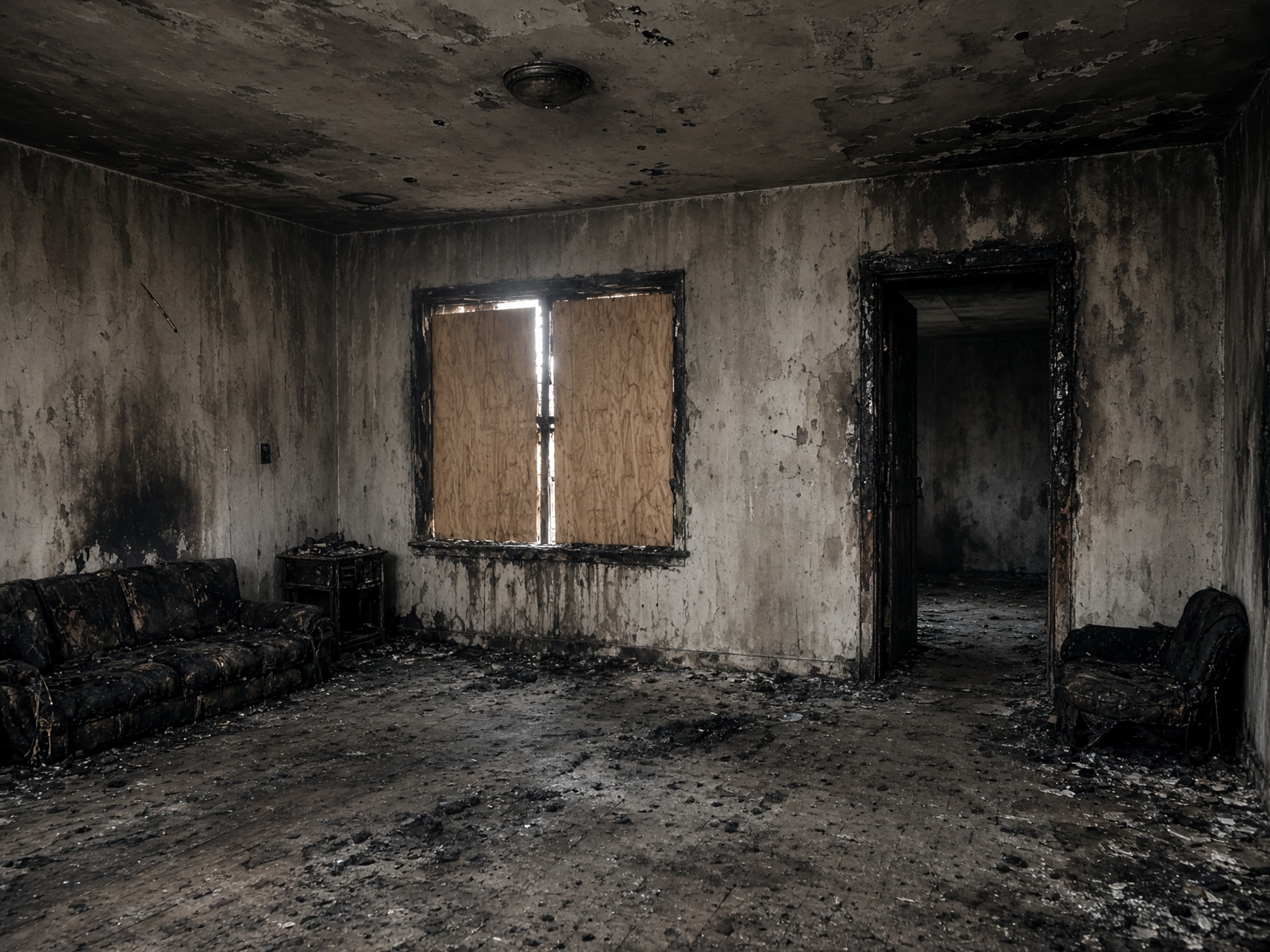
Do not re-enter until the fire marshal has cleared the structure. Then photograph every room, every damaged area, every affected item. Do not throw anything away, even if it looks destroyed. Burnt belongings are part of the claim.
Day 2 — Call a restorer before the number is set
When you call the insurance company first, they dispatch an adjuster whose job is to document the loss from the insurer’s side. A qualified restoration contractor gives you an independent assessment of smoke, heat, and water damage before those numbers harden. A good contractor is also in the room when the adjuster walks.
Day 3 — Secure the property
Board-up, roof tarp, perimeter. That stops weather, theft, and the argument that you failed to mitigate further loss.
Day 4 — Ask about Additional Living Expenses
Most homeowners policies include ALE — hotel, meals, and related costs while the house is uninhabitable. People leave this on the table because nobody told them to ask.
Day 5 — Document past the burn zone
Smoke and soot travel. Heat warps what did not ignite. Firefighter water creates a second loss. The scope has to include all three.
Day 6 — Read the policy, or have a PA do it
Replacement cost or actual cash value? Deductible? Exclusions? Statewide Adjusters can walk the form so you are not guessing from a declarations page.
Day 7 — Choose one company that can finish
Look for local references and a contractor who finishes the job. We do that work across Will, Cook, DuPage, Kane, Lake, Grundy, Kankakee, and Kendall. A public adjuster, if you want one, is a separate hire — Statewide Adjusters is ours.
If your home was just damaged by fire, call for a free look. We will tell you what we see on the house and what the next 48 hours of mitigation should be. Statewide Adjusters can review the policy if you hire them.