
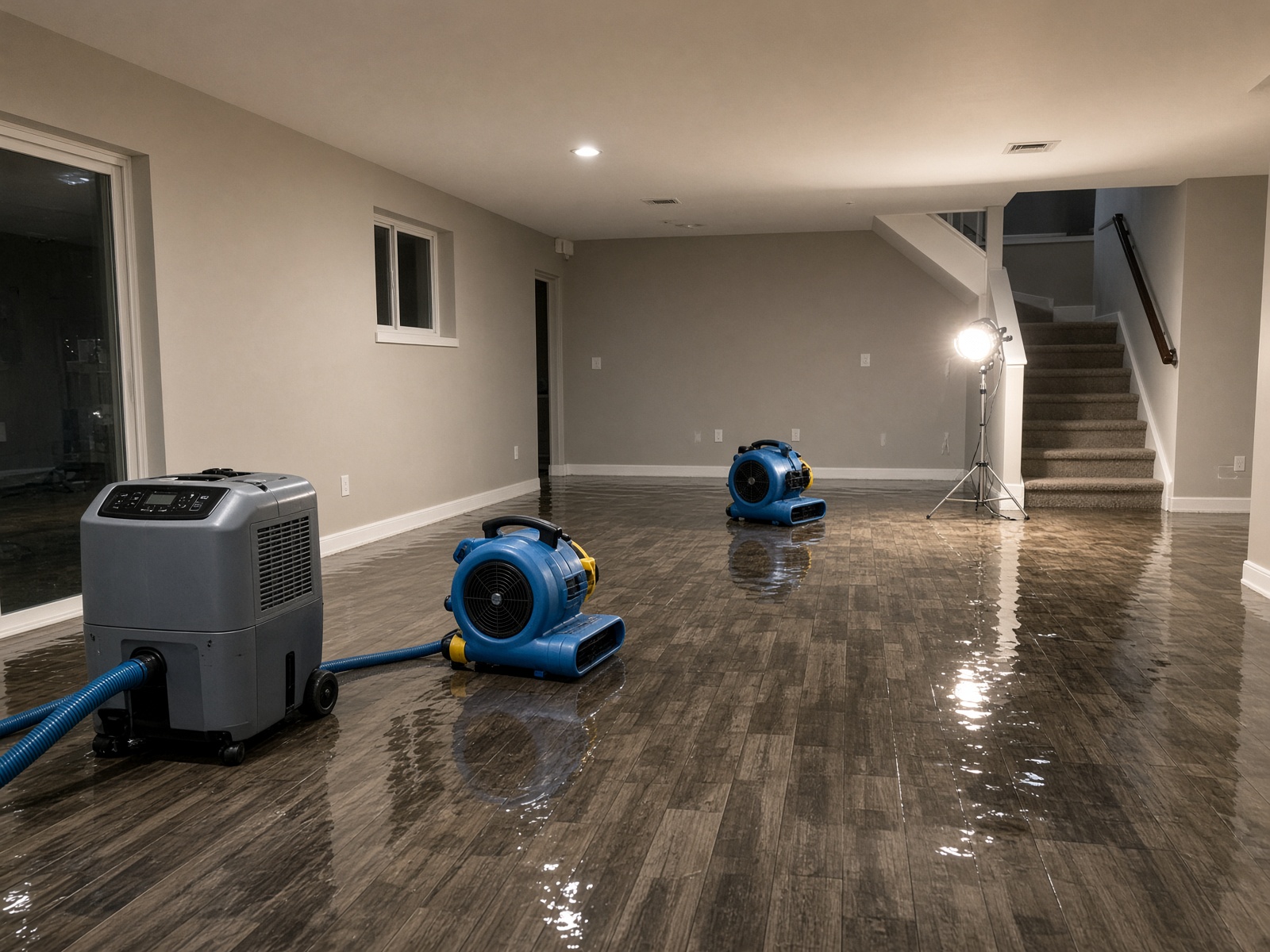
Why spring flooding hits this hard here
Spring in the Chicago suburbs brings heavy rainfall, snowmelt, and a very real chance of water in the basement. If you live in Will, Cook, DuPage, Kane, or Lake County, the clock starts the moment water crosses the slab.
Communities like Joliet, Naperville, Aurora, Bolingbrook, and Plainfield see the same pattern every wet season. The region’s clay-heavy soil does not absorb rain. Aging storm sewers surcharge. A sump that kept up in March fails on the third day of rain in May.
Typical sources we see
Storm-sewer backup and overland flow. Sump pump failure during multi-day rain. Foundation cracks opened by freeze-thaw. Ice-dam melt that traveled down the wall cavity. Appliance failures — water heaters, washers, supply lines.
The first 24–48 hours
Mold can begin growing within a day or two of a water event. Consumer box fans do not dry a wall cavity.
Do this in order
- 01Stop the source if it is safe — main valve or the actual entry point.
- 02Photograph and video every affected area before you move a thing. That is the claim.
- 03Notify your insurance company. Most policies require prompt reporting.
- 04Do not run electrical appliances in standing water.
- 05Call a restoration contractor. Industrial extraction and dehumidification are not optional if you want the structure back.
We extract, map moisture, dry, and rebuild. Statewide Adjusters can work the claim file if you hire them. Will, Cook, DuPage, Kane, Lake, Grundy, Kankakee, and Kendall.